
Air Voids in Asphalt: Why Compaction Controls Pavement Performance
Air voids may seem like a small detail in asphalt mix design, but they have a major influence on how a pavement performs in service.
In dense graded asphalt, air voids are the small spaces left within the compacted mix. They are not accidental. Asphalt mixes are designed in the laboratory to achieve a target air void range, then manufactured and placed in the field to meet the required in situ air void specification.
When the compacted air voids are too low or too high, the performance of the asphalt can change significantly. This affects rutting resistance, fatigue life, structural strength, permeability, moisture resistance, ravelling, and long term pavement durability
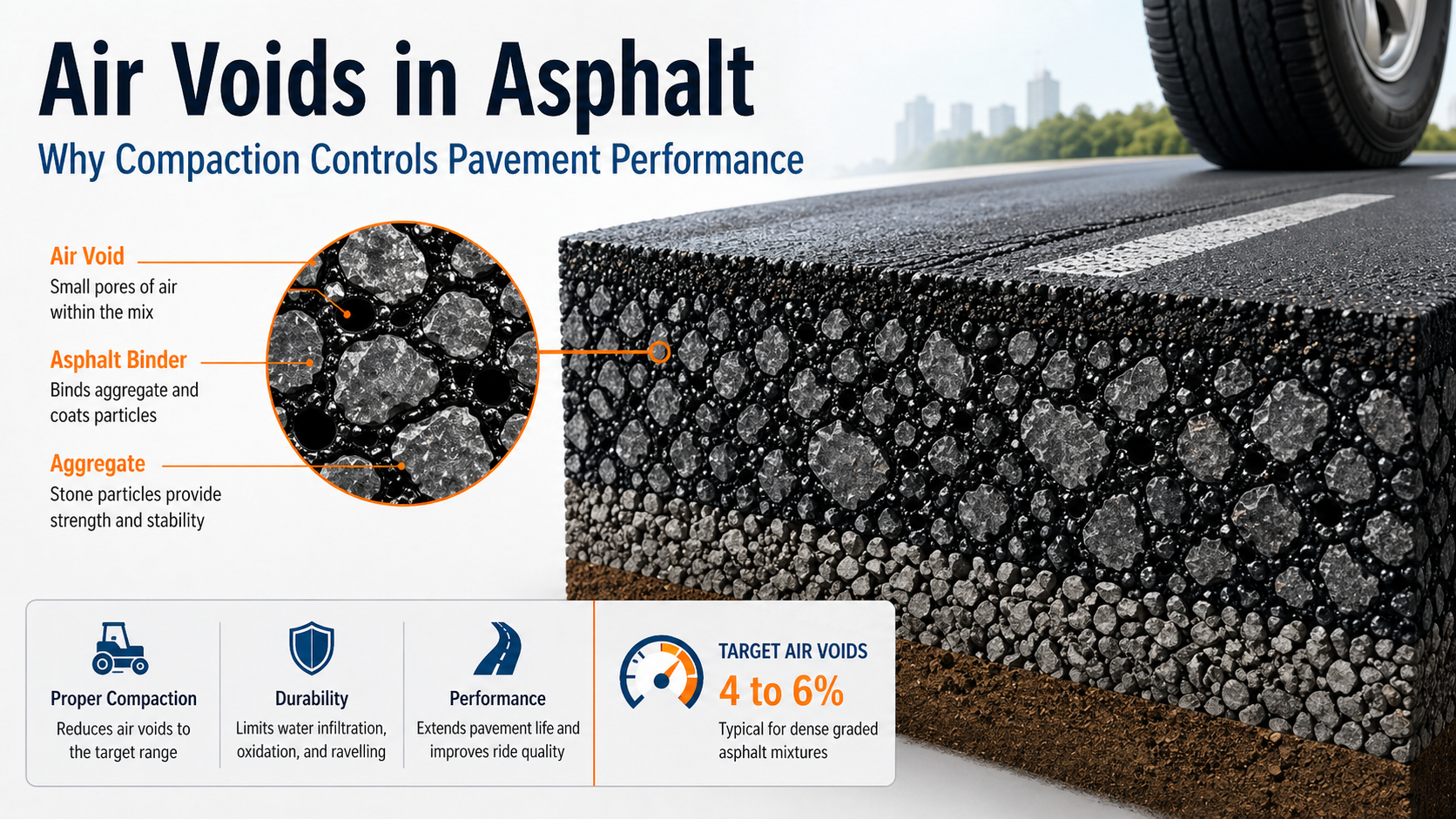
What Are Air Voids in Asphalt?
Air voids are the internal spaces between aggregate particles and binder within a compacted asphalt mix.
They are influenced by several factors, including:
• aggregate grading
• binder content
• compaction temperature
• compaction effort
• asphalt layer thickness
• construction practice
• field placement conditions
In simple terms, air voids indicate how well the asphalt has been compacted. Good compaction helps create a dense, stable, and durable pavement layer. Poor control of air voids can increase the risk of early pavement distress.
Why Design Air Voids Matter
Asphalt mix design is not only about choosing the right materials. It is about achieving the right balance between stability, durability, flexibility, and resistance to water and air movement.
Design air voids are selected based on the expected traffic loading and the function of the asphalt layer within the pavement structure.
The air voids measured in the field at placement are often slightly higher than the laboratory design air voids. This is because asphalt can continue to consolidate during the first one to two years of traffic loading.
This is why the goal is not simply to compact asphalt as much as possible. The goal is to compact it to the right level.
Too little air void space can make the asphalt unstable.
Too much air void space can make the asphalt permeable, weaker, and more vulnerable to moisture damage and oxidation.
Key Asphalt Properties Influenced by Air Voids
Air voids affect several important asphalt performance properties:
• rutting resistance
• fatigue life
• structural strength
• permeability
• ravelling resistance
Each of these properties plays a role in pavement performance. When air voids are not properly controlled, the pavement may look acceptable at the surface but still be at risk of early deterioration.
1. Rutting Resistance
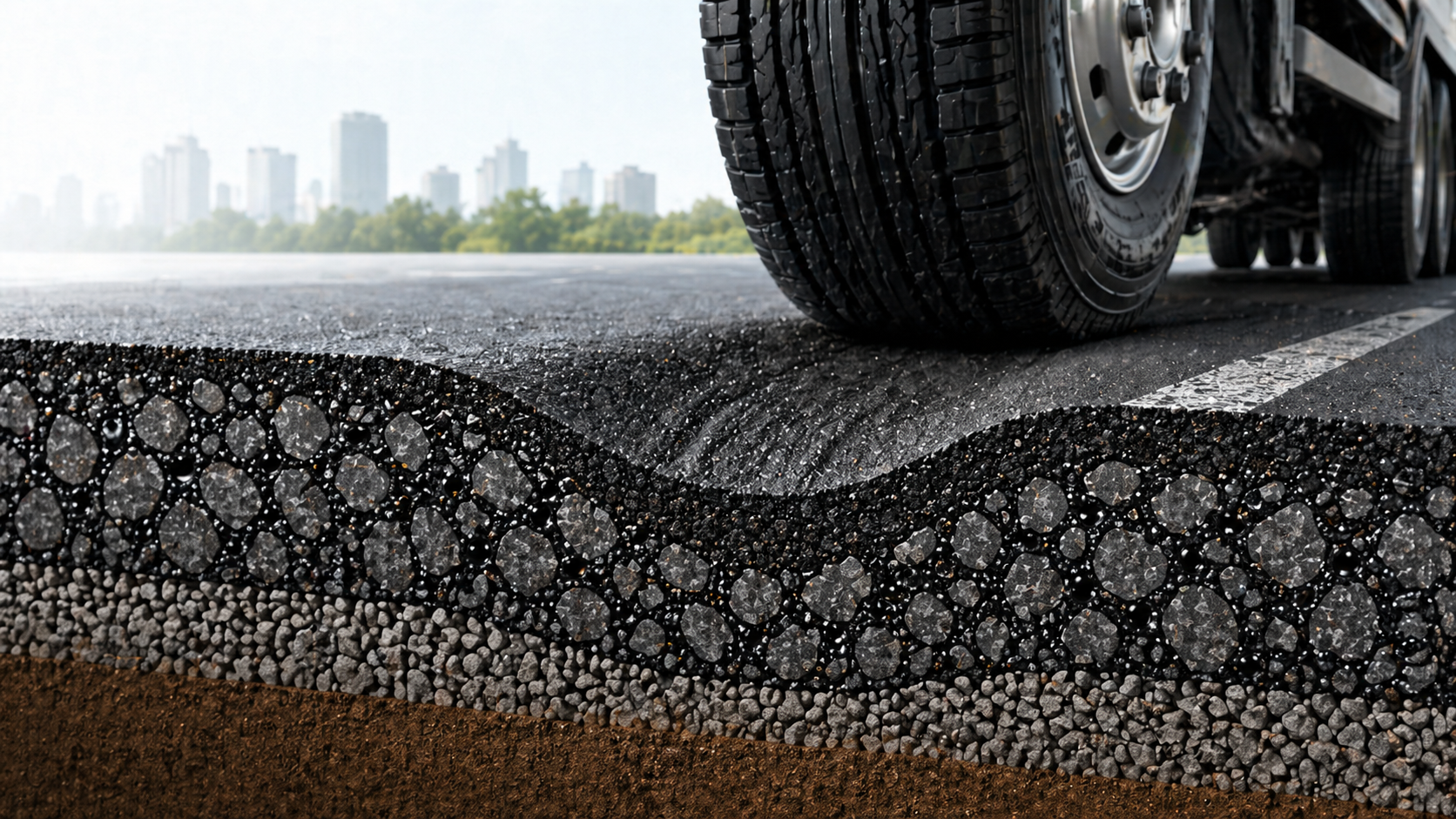
Rutting is the permanent deformation that forms in wheel paths under repeated traffic loading.
Low air voids can make asphalt more prone to rutting. When air voids are too low, especially below about 2 percent, binder can overfill the internal void space. Under heavy traffic and hot weather, the binder may behave like a lubricant, reducing mix stability and allowing deformation to occur.
High air voids can also contribute to rutting. Poorly compacted asphalt may have weak aggregate interlock, which allows the mix to further consolidate under traffic.
This means rutting can occur when the mix is too rich, too unstable, or insufficiently compacted.
2. Ravelling Resistance
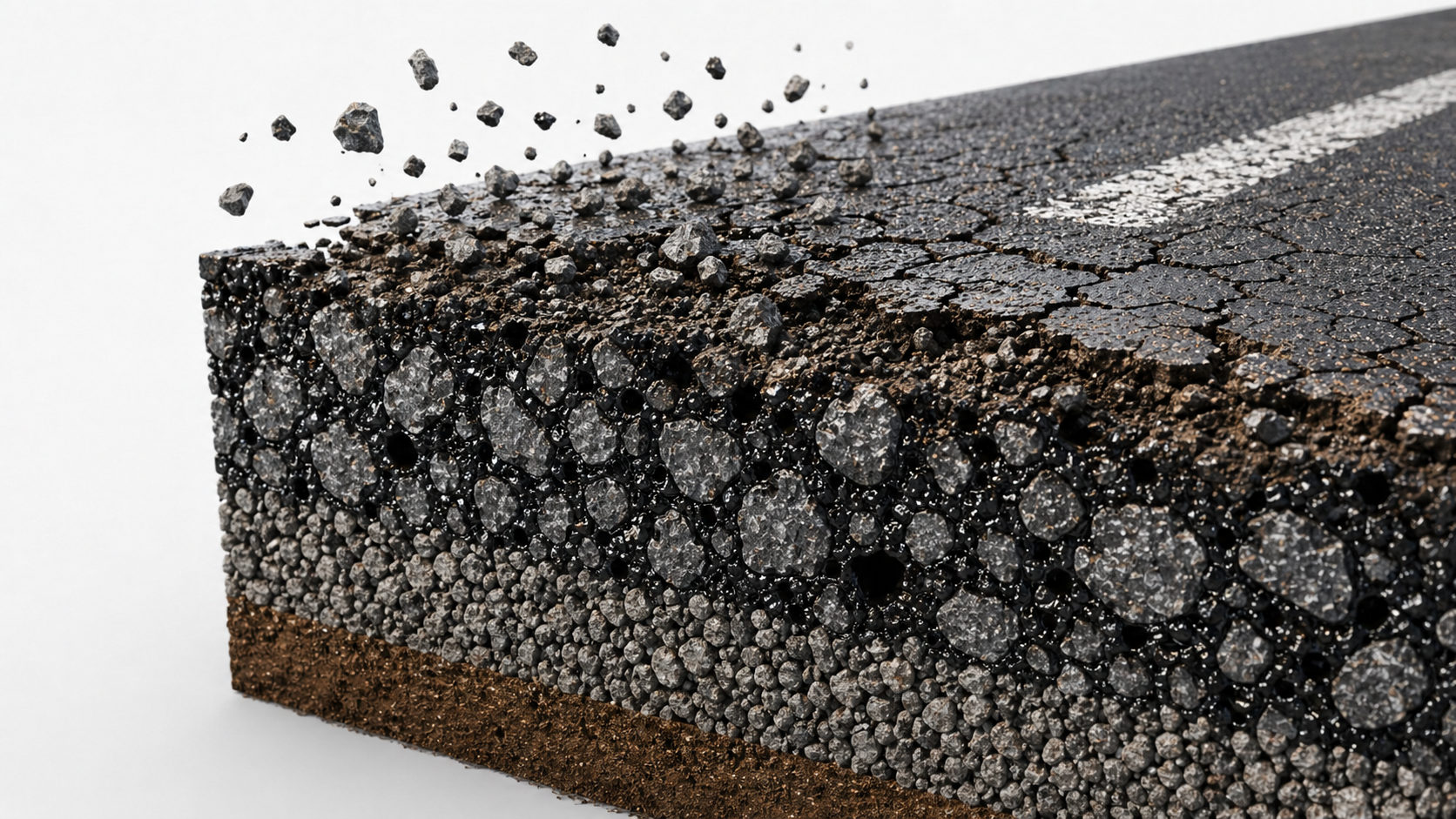
Ravelling is the loss of aggregate from the asphalt surface.
It can occur when the binder ages through oxidation, when aggregate interlock is weak, or when the asphalt has not been compacted properly.
High air voids increase exposure to air and water. This can accelerate binder ageing, weaken the bond between binder and aggregate, and cause surface particles to loosen.
Once ravelling begins, the pavement surface can lose texture, durability, and protection. If left untreated, ravelling can lead to pothole formation and a shorter surfacing life.
3. Structural Strength
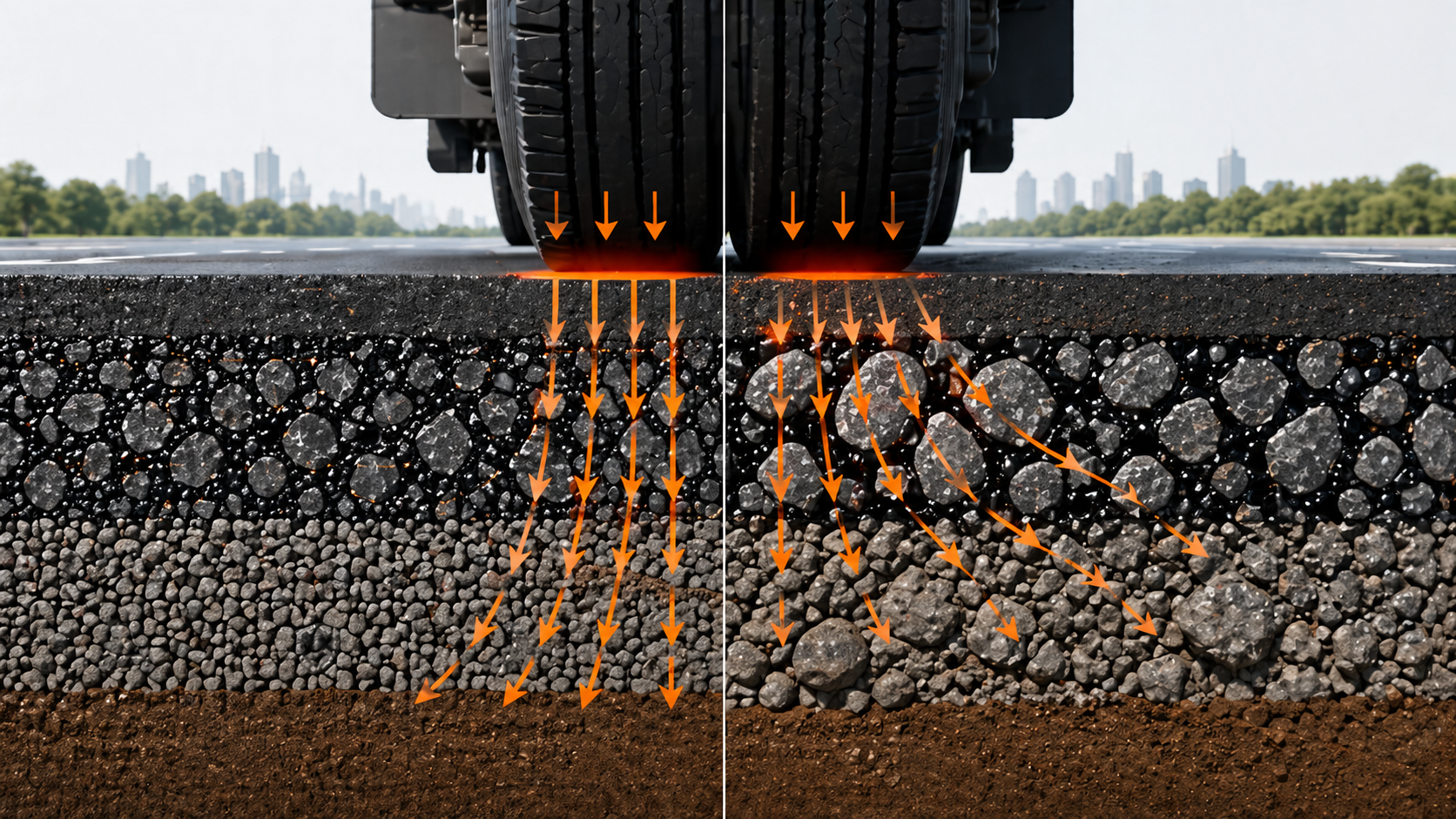
The structural strength of asphalt is closely linked to its modulus.
Modulus is a measure of how stiff the asphalt is and how well it can distribute traffic loads.
As air voids increase, asphalt modulus decreases. The source material notes that increasing air voids from 5 percent to 8 percent can reduce modulus by about 20 percent.
A lower modulus means the asphalt layer may be less effective at carrying and distributing loads. This can increase pavement strain, reduce structural performance, and shorten service life.
4. Permeability
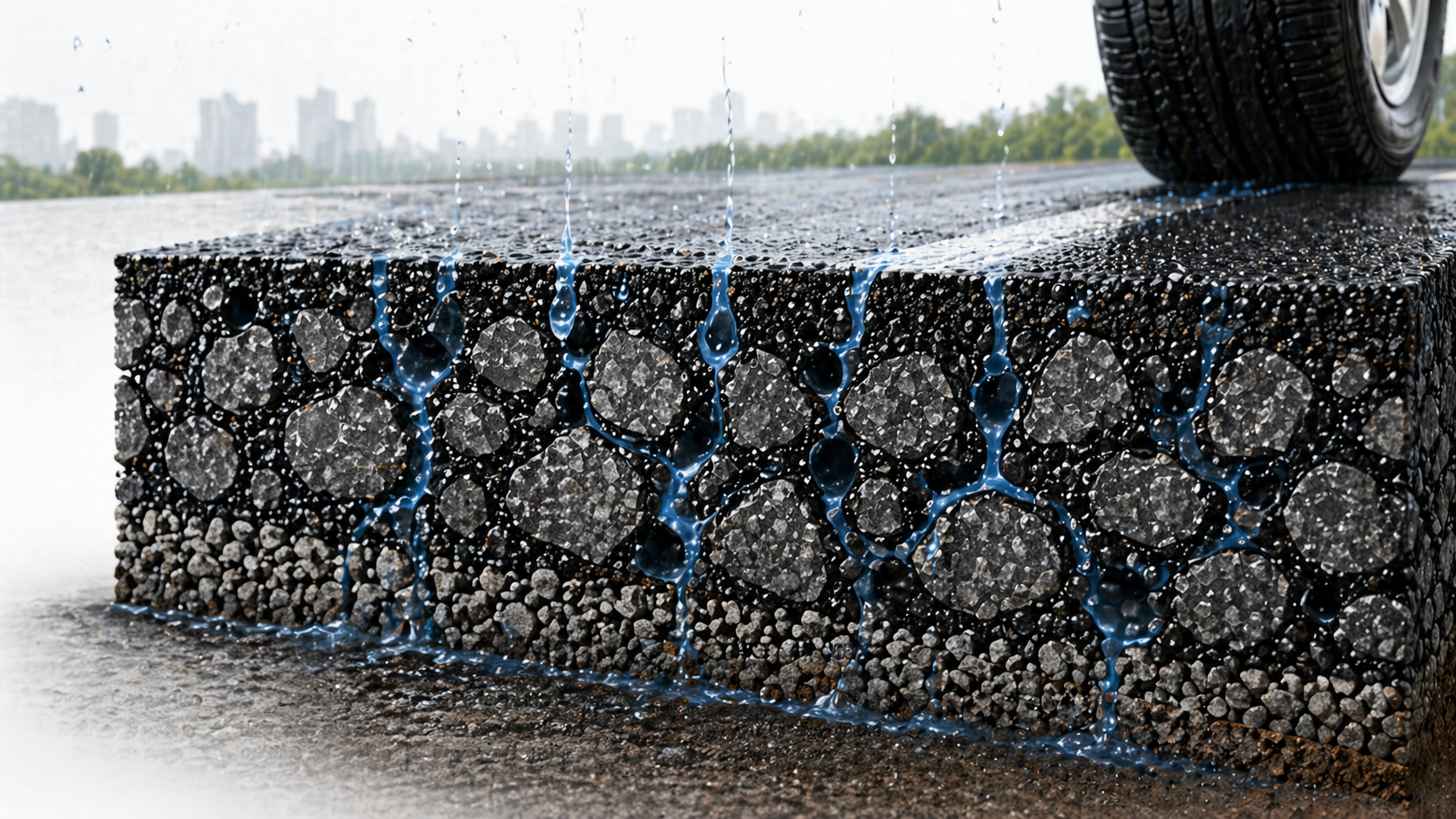
Permeability refers to the movement of air and water through the compacted asphalt mix.
When in situ air voids are below about 7 percent, the voids are generally considered discontinuous. This means they are not strongly connected, so water and air movement through the mix is limited.
When air voids rise above this level, the risk of interconnected voids increases.
This creates two major problems.
First, air can enter the asphalt and accelerate binder oxidation. Oxidised binder becomes harder and more brittle, making the surface more prone to cracking and ravelling.
Second, water can enter the mix and weaken the bond between binder and aggregate. Under traffic, water pressure within the pores can contribute to stripping, loss of integrity, and moisture related damage.
If air voids exceed about 13 percent, dense graded asphalt may begin to behave more like a free draining material, which is usually not the intended function of that mix type.
5. Fatigue Life
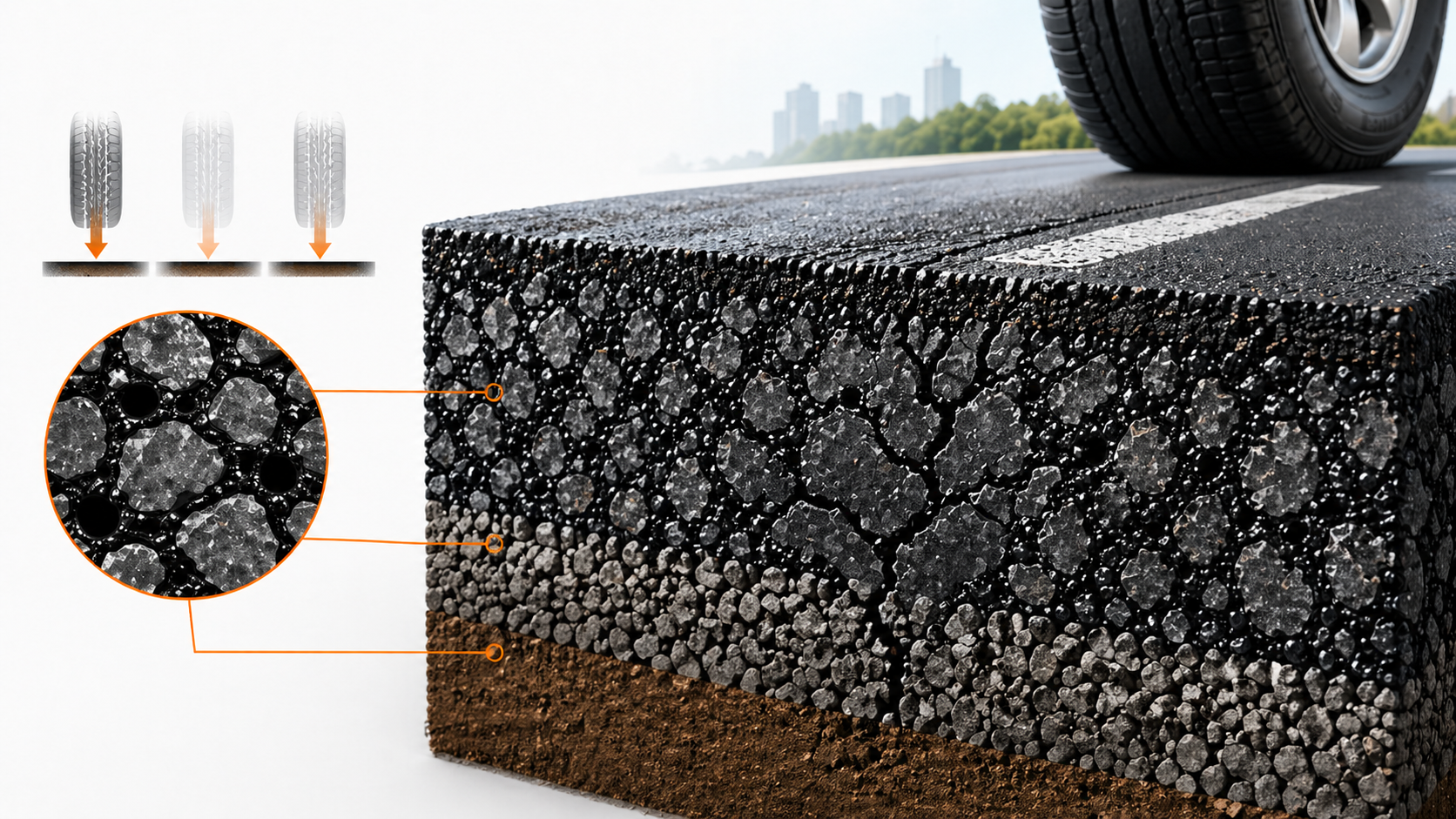
Fatigue life describes the ability of asphalt to resist cracking under repeated traffic loading.
As air voids increase, fatigue life generally decreases. Higher air voids reduce the internal cohesion and load carrying ability of the asphalt layer.
The source material notes that increasing air voids from 5 percent to 8 percent can reduce fatigue life by about 50 percent.
That is a significant reduction in performance from what may appear to be a small change in compaction.
For pavement engineers and asset managers, this matters because fatigue cracking often marks the beginning of more serious pavement deterioration.
Why Field Measurement Is Critical
Because air voids strongly influence asphalt pavement performance, they must be checked during construction.
One common method is to take cores from the compacted asphalt layer and compare their density to the mix's maximum density.
Once compacted density is understood, density gauges can support process control and compliance during field placement.
This step is important because asphalt performance cannot be confirmed by appearance alone. A pavement can look smooth and finished but still have air void levels that increase the risk of future distress.
The Key Lesson for Pavement Performance
Air-void control is one of the most important aspects of asphalt compaction and quality assurance.
When air voids are too low, the asphalt may become unstable and more prone to rutting.
When air voids are too high, the asphalt may become more permeable, more oxidised, weaker, and more vulnerable to ravelling, cracking, stripping, and moisture damage.
The best-performing asphalt is not simply the densest asphalt. It is asphalt compacted within the right specification range for its mix type, traffic loading, and pavement function.
Final Thought
Air voids are small spaces with big consequences.
They influence how asphalt carries traffic, resists moisture, ages over time, and maintains surface integrity.
For pavement engineers, road asset managers, and construction teams, air void control should not be treated as a minor compliance item. It is a direct indicator of asphalt durability, pavement performance, and long-term asset value.
A road may look complete once the asphalt is placed, but its future performance is often determined by what happens inside the compacted mix.