
Dense Graded Asphalt: Why It Remains the Backbone of Road Construction
In pavement engineering, materials survive for decades only if they perform consistently under traffic. Dense graded asphalt remains one of the most widely used materials in road construction and highway pavements for exactly that reason.
Despite advances in new asphalt technologies, engineers continue to rely on dense graded hot mix asphalt properties and performance because the material provides a strong, stable, and predictable pavement structure.
What Is Dense Graded Asphalt in Road Construction?
At its core, dense graded asphalt is a mixture of coarse aggregates, fine aggregates, mineral filler, and asphalt binder designed with a full range of particle sizes.
This aggregate gradation requirement for dense graded asphalt allows smaller particles to fill the voids between larger aggregates. The result is a tightly packed mixture that distributes traffic stresses efficiently.
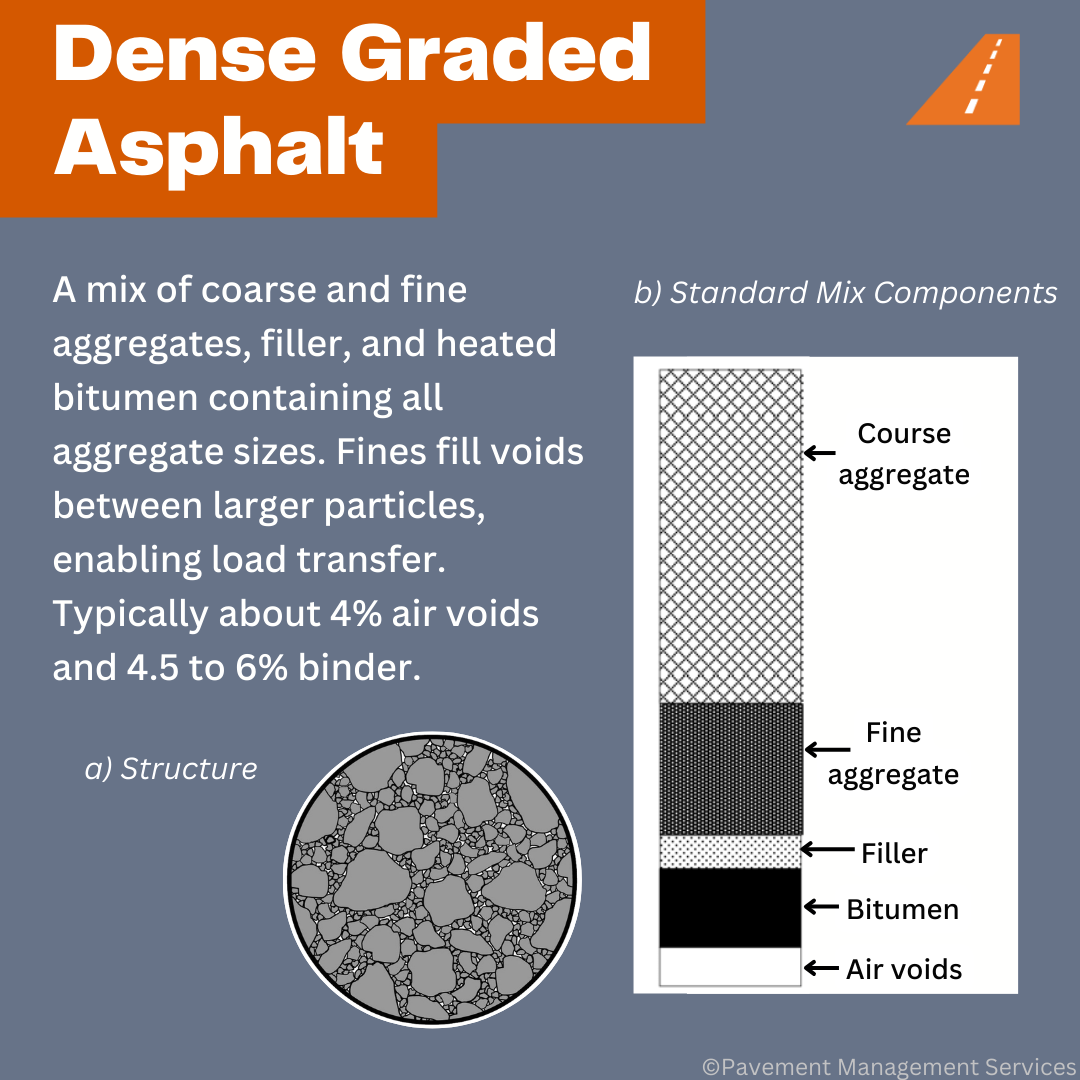
Typical mix design parameters include:
• Air voids: about 4 percent
• Voids in mineral aggregate (VMA): typically 11 to 17 percent
• Binder content: usually between 4.5 and 6 percent
Understanding dense graded asphalt air voids and VMA explained in mix design is critical because these parameters control durability, stability, and moisture resistance.
How Dense Graded Asphalt Distributes Traffic Loads
One of the key reasons engineers rely on this material is how dense graded asphalt distributes traffic loads.
The well graded aggregate structure creates an internal skeleton where both coarse and fine particles carry stress. The asphalt binder coats the aggregates and provides cohesion, allowing the pavement layer to resist deformation.
This structure delivers several advantages:
• High load carrying capacity for highway pavement design
• Strong resistance to rutting and fatigue
• Long term dense graded asphalt pavement durability and performance
Because of these characteristics, dense graded asphalt can serve as a surface course, binder course, or base layer depending on the pavement design.
Dense Graded Asphalt vs Open Graded Asphalt Pavement
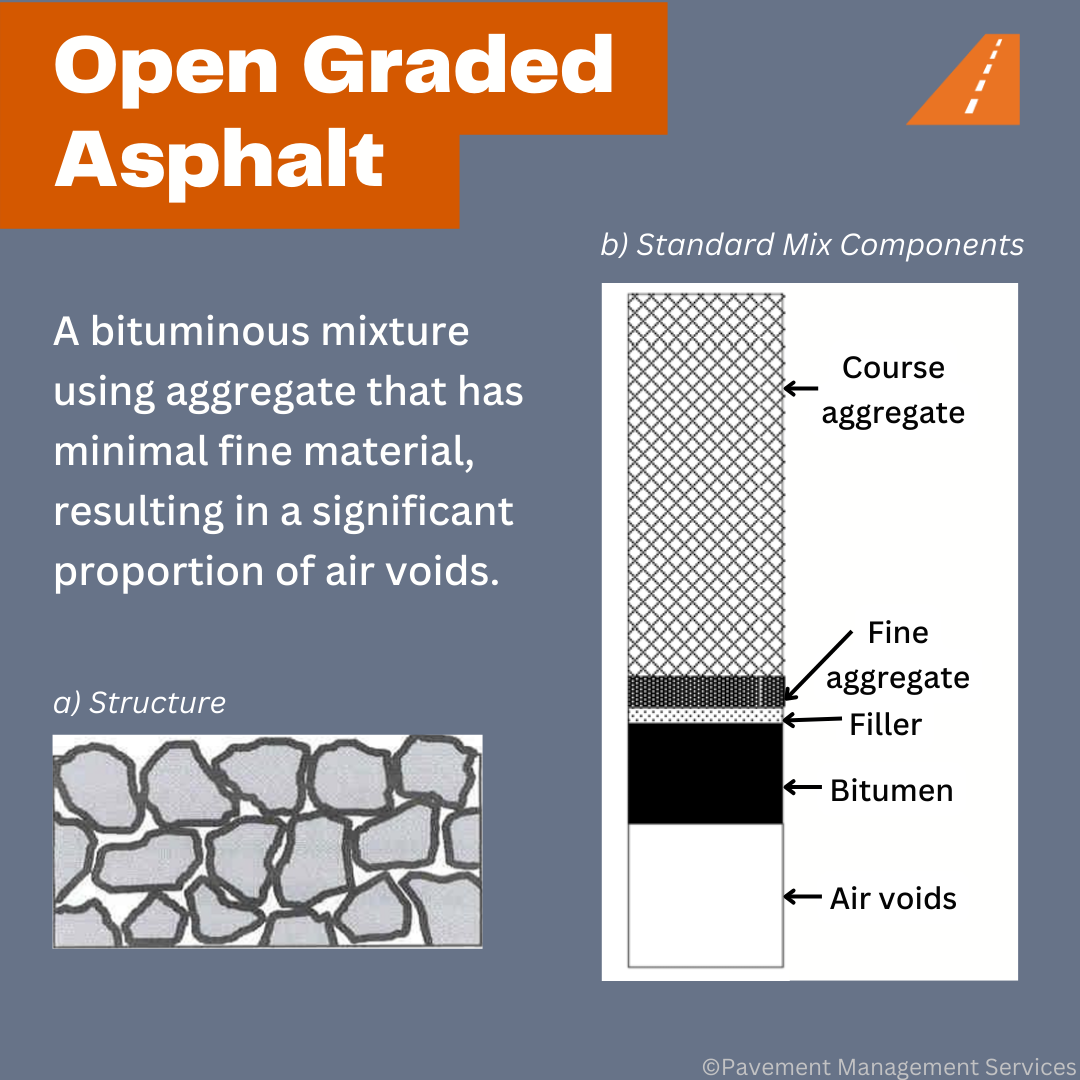
A common comparison in pavement engineering is dense graded asphalt vs open graded asphalt pavement.
Dense graded mixes contain a full spectrum of aggregate sizes, producing a tight matrix that minimizes permeability and supports structural loads.
Open graded asphalt, by contrast, contains fewer fines and more interconnected voids. It is designed primarily for surface drainage and skid resistance, rather than structural support.
For most highway pavement structures, dense graded asphalt remains the primary structural layer.
Dense Graded Asphalt vs Stone Mastic Asphalt
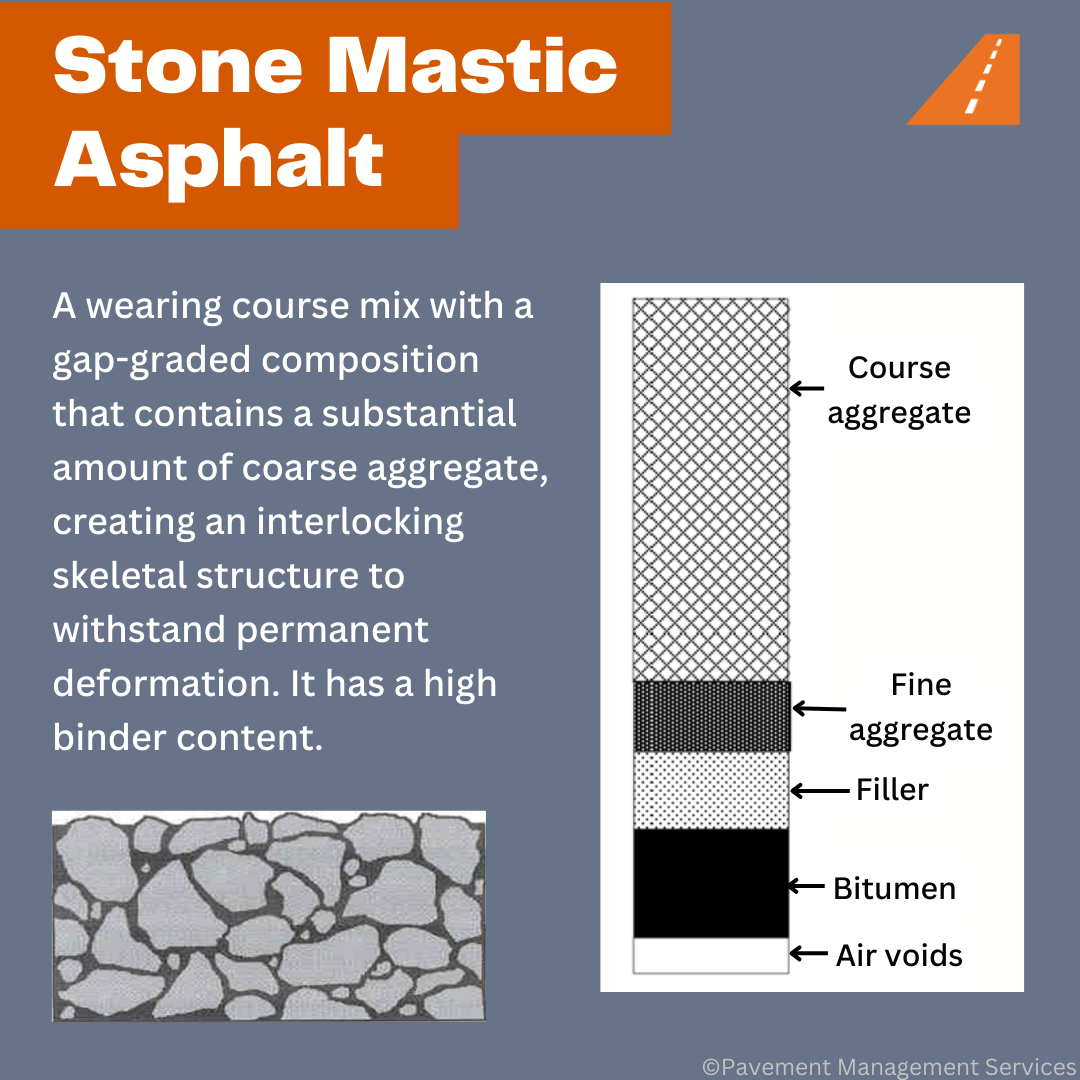
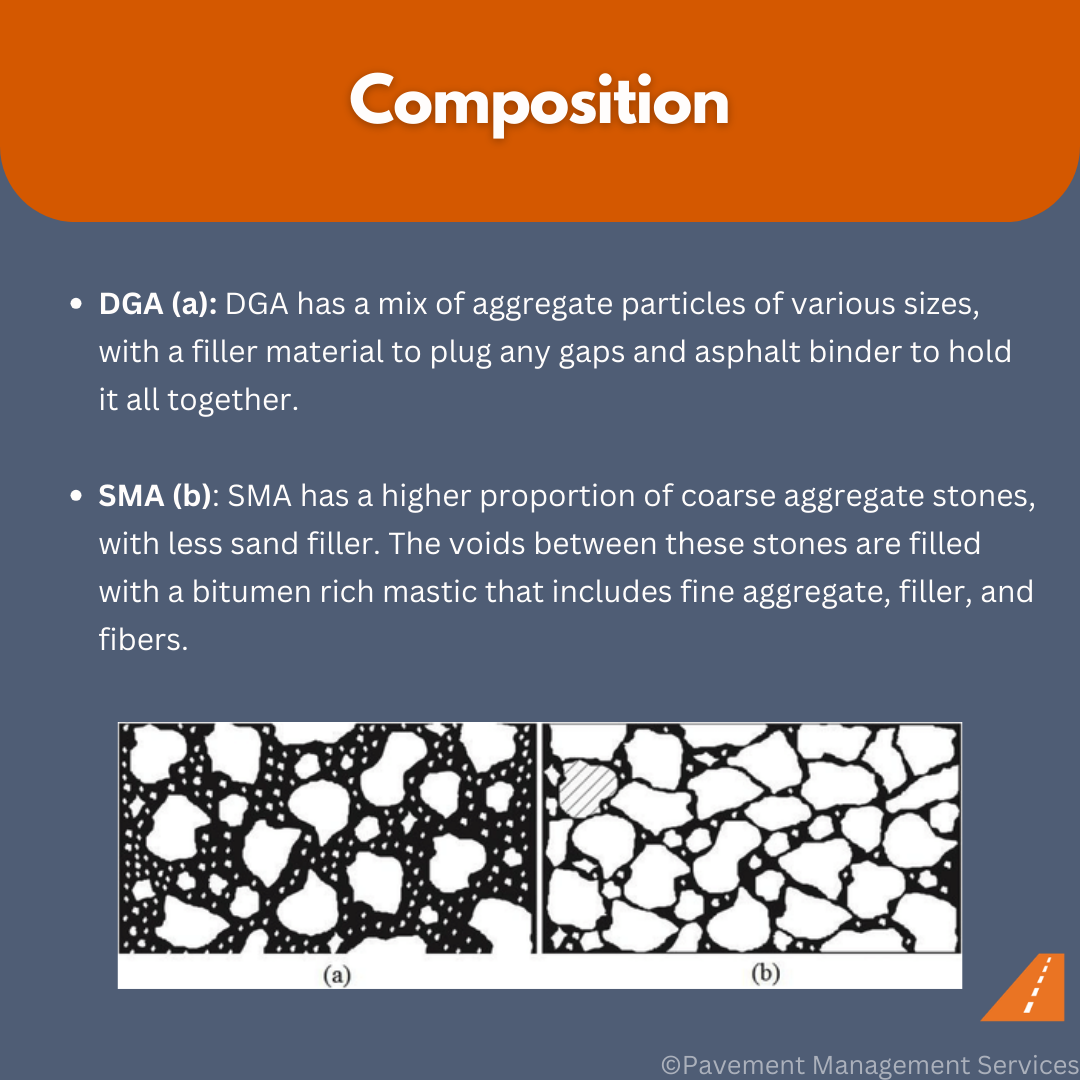


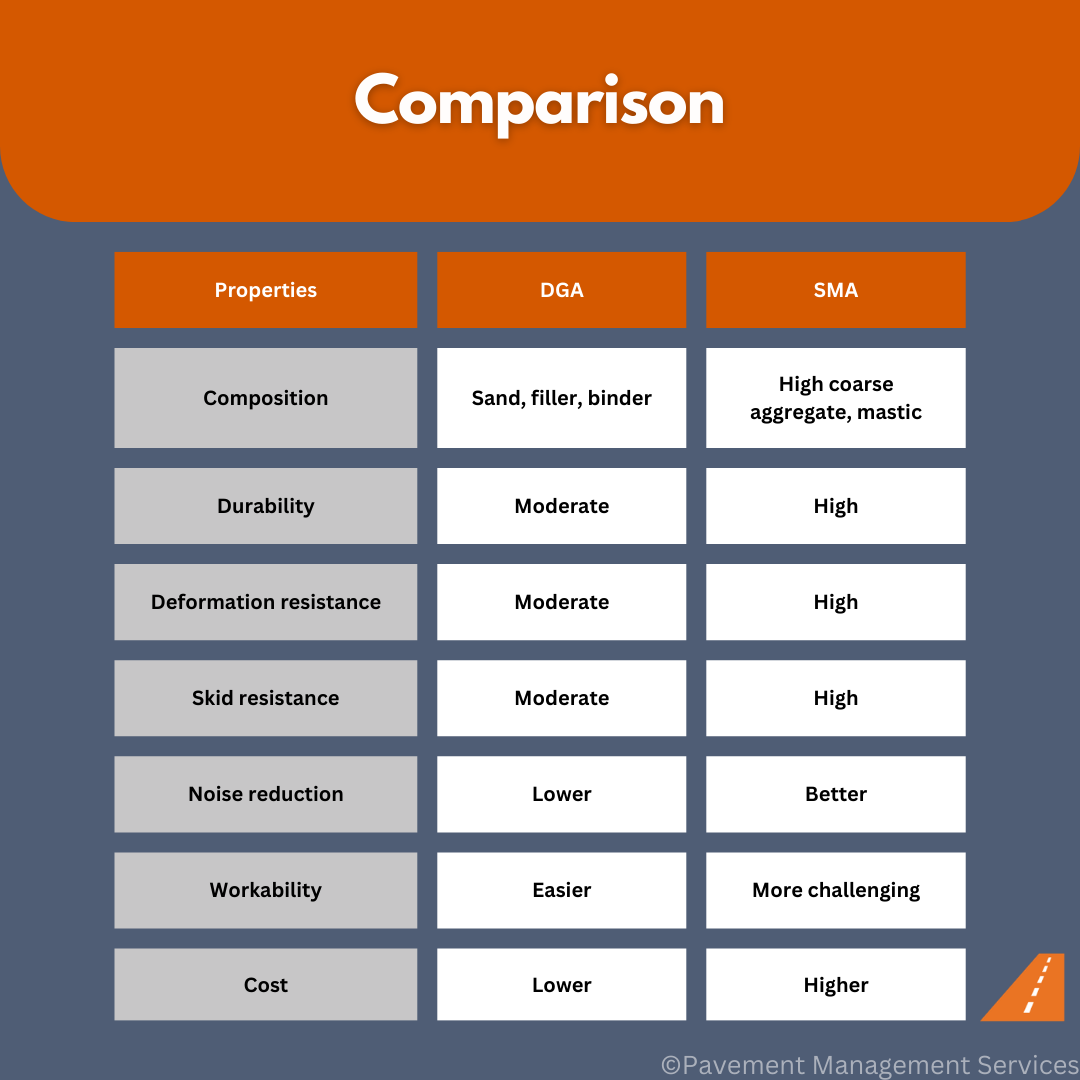
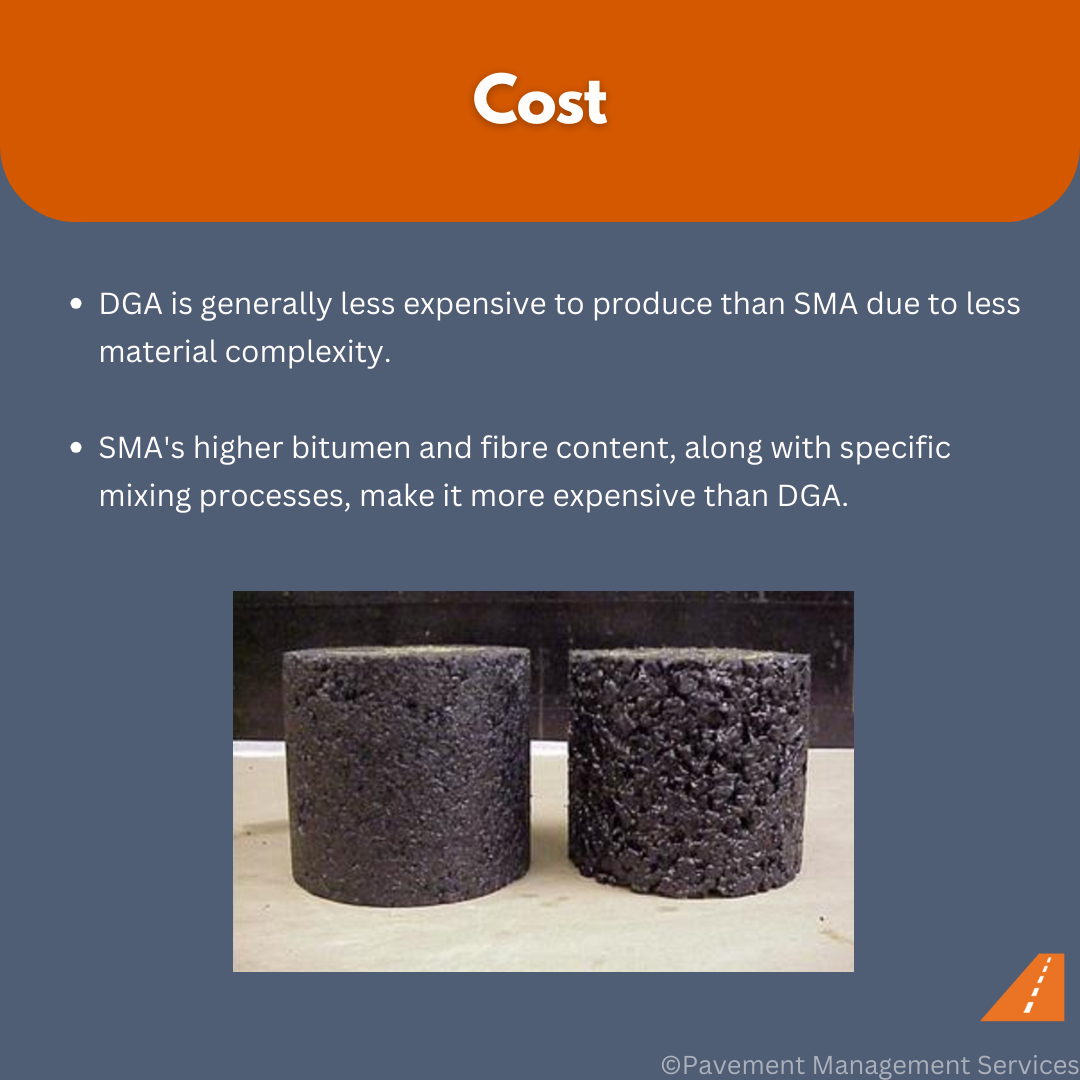
Another frequent engineering discussion involves dense graded asphalt vs stone mastic asphalt comparison.
Stone mastic asphalt relies on a strong stone on stone skeleton with higher binder content and stabilizing fibers. It is often used for heavy traffic conditions where rutting resistance is critical.
Dense graded asphalt, however, remains more versatile. Its balanced mixture design allows it to perform effectively across urban roads, highways, and airport pavements.
Why Mix Design and Construction Matter
Even the best materials can fail if construction practices are poor.
Proper dense graded asphalt mix design for highway pavements ensures the correct balance of stability, durability, and workability. Engineers must control several factors:
• Dense graded asphalt binder content and mix design
• aggregate gradation and particle distribution
• dense graded asphalt compaction and field density control
• moisture resistance and binder adhesion
If these factors are not properly controlled, problems such as rutting, moisture damage, or early cracking can develop.
The Role of Dense Graded Asphalt in Modern Pavement Engineering
Modern asphalt innovations continue to evolve. Engineers now work with:
• recycled asphalt pavement (RAP)
• polymer modified binders
• warm mix asphalt technologies
Yet many of these developments still build on the same framework used in dense graded asphalt mixture components explained through traditional mix design.
In many ways, dense graded asphalt remains the reference material against which newer asphalt technologies are evaluated.
Final Thoughts
For engineers designing pavement systems, performance history matters. Dense graded asphalt has decades of proven reliability across highways, airport runways, and urban road networks.
When properly designed and constructed, it provides a durable, structurally efficient pavement layer capable of carrying heavy traffic for years.
In modern infrastructure networks, dense graded asphalt continues to be not just common, but essential to long term pavement performance and road asset management.