
Chip Seal vs Slurry Seal in Sydney: Choosing the Right Road Reseal in NSW
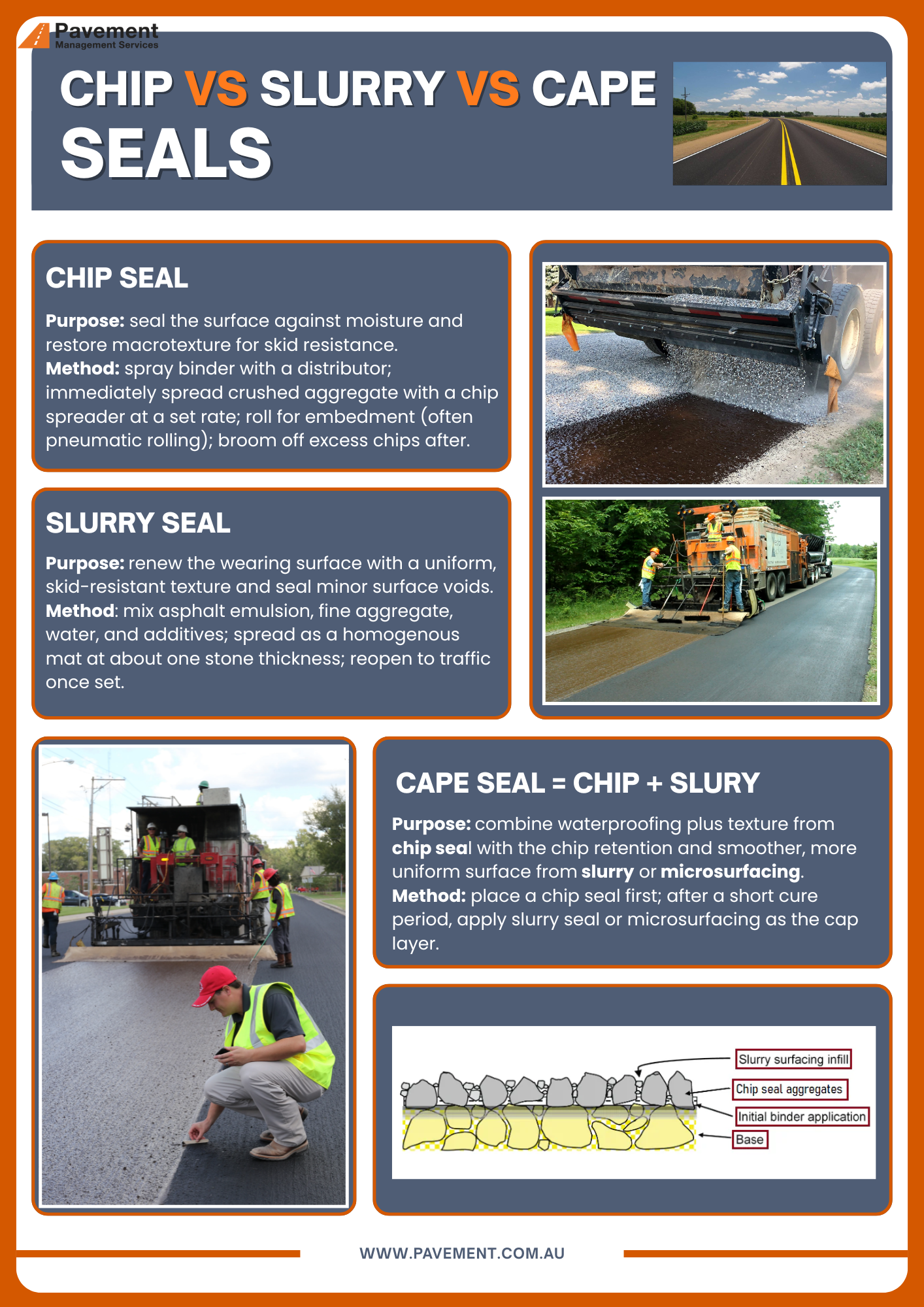
Choosing the right resurfacing treatment at the right time is one of the biggest levers in road asset management. In Sydney, two preventive treatments recur frequently: chip seal (sprayed seal) and slurry seal. A third option, cape seal, combines both into a system.
This guide explains each treatment using the same structure: purpose, method, and best fit. It is written for Sydney councils, contractors, and asset managers who want clearer decisions and better outcomes.
Quick rule of thumb
Chip seal: choose it when waterproofing and macrotexture are the priority.
Slurry seal: choose it when you want a uniform urban wearing surface on a structurally sound road.
Cape seal: choose it when you want the sealing strength of chip seal plus a more refined top surface.
Chip seal (sprayed seal)
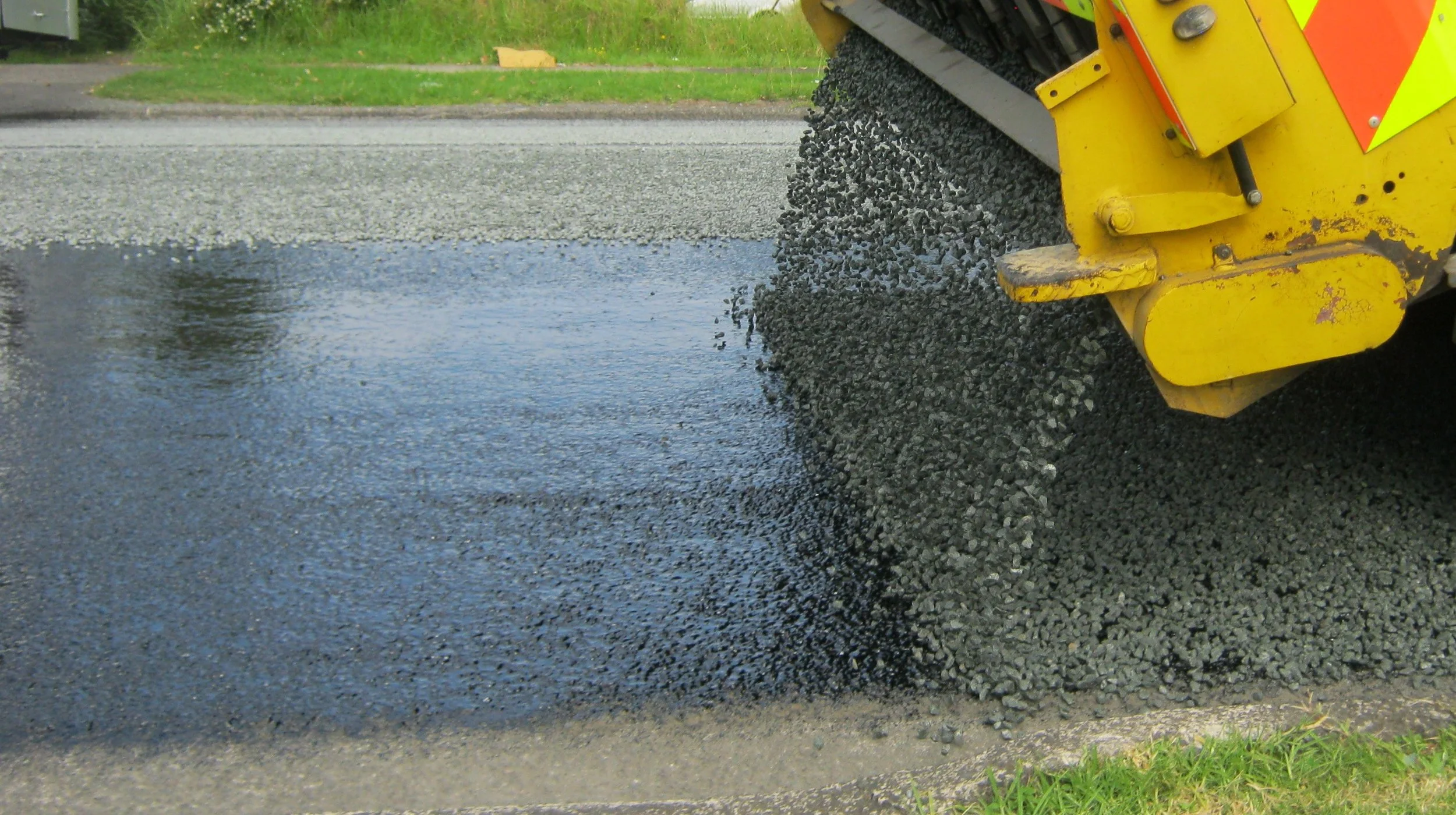
Image credit: witt.ac.nz
Purpose: Seal the surface against moisture ingress and restore macrotexture for wet weather skid resistance.
Method: Binder is sprayed with a distributor, aggregate is applied immediately with a chip spreader at a controlled rate, rolling achieves embedment and orientation (pneumatic rolling is common), then brooming removes loose excess aggregate.
Best fit in Sydney: Routes where sealing and friction matter most, including higher speed corridors and outer urban networks, provided the pavement shape is still acceptable and major rutting is not the dominant issue.
Common success checks:
Even binder application, correct spread rate, correct embedment.
Loose stone management and sweeping planned into traffic control.
Slurry seal
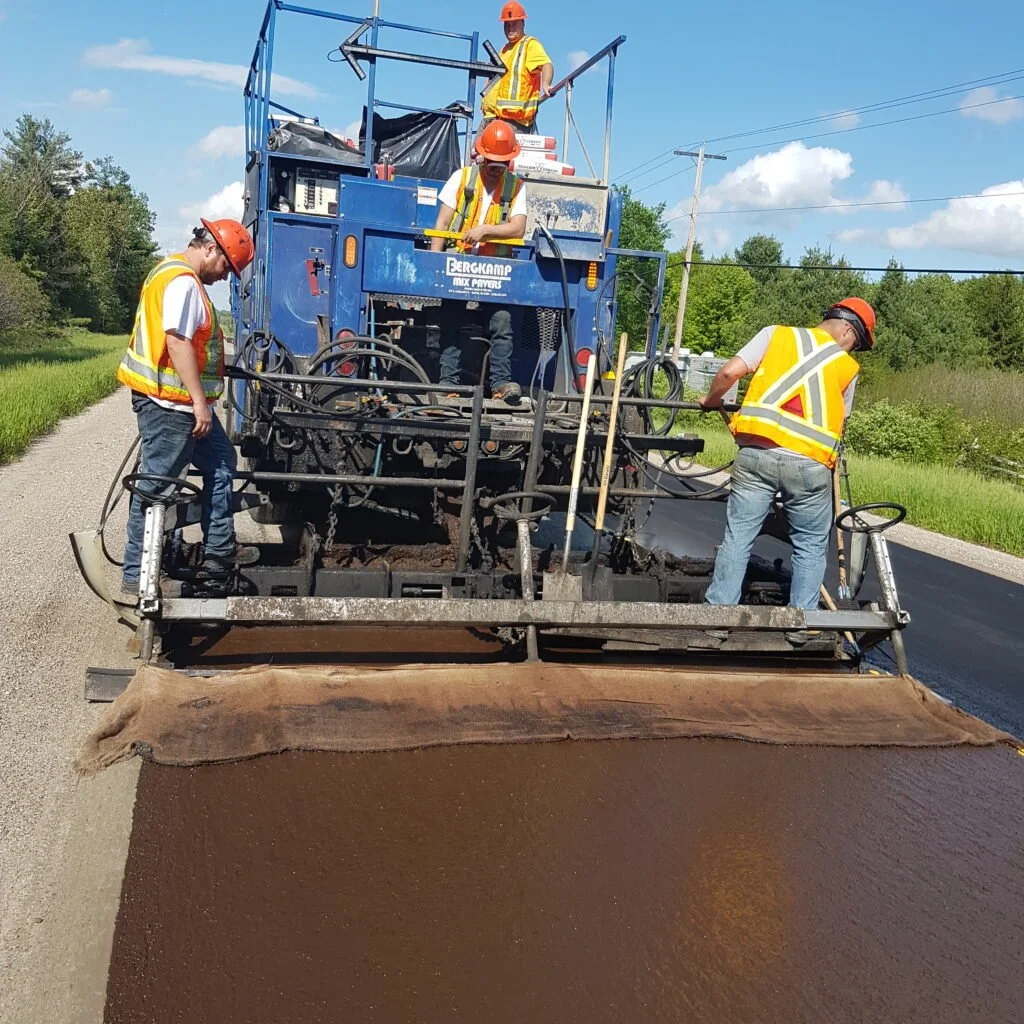
Image Credit: duncor.ca
Purpose: Renew the wearing surface, seal minor surface voids and fine cracking, slow oxidation, and restore a consistent skid resistant texture on pavements that are still structurally sound.
Method: A designed mix of bitumen emulsion, fine aggregate, water, and additives is mixed and spread as a homogenous mat at about one stone thickness, then allowed to set before reopening to traffic.
Best fit in Sydney: Local streets, residential roads, and car parks where you want a smoother finish, lower noise, and consistent texture, without the cost of an asphalt overlay.
Common success checks:
Surface preparation is clean and sound; defects are patched first.
Correct mix design, correct application rate, and correct set time management.
Cape seal
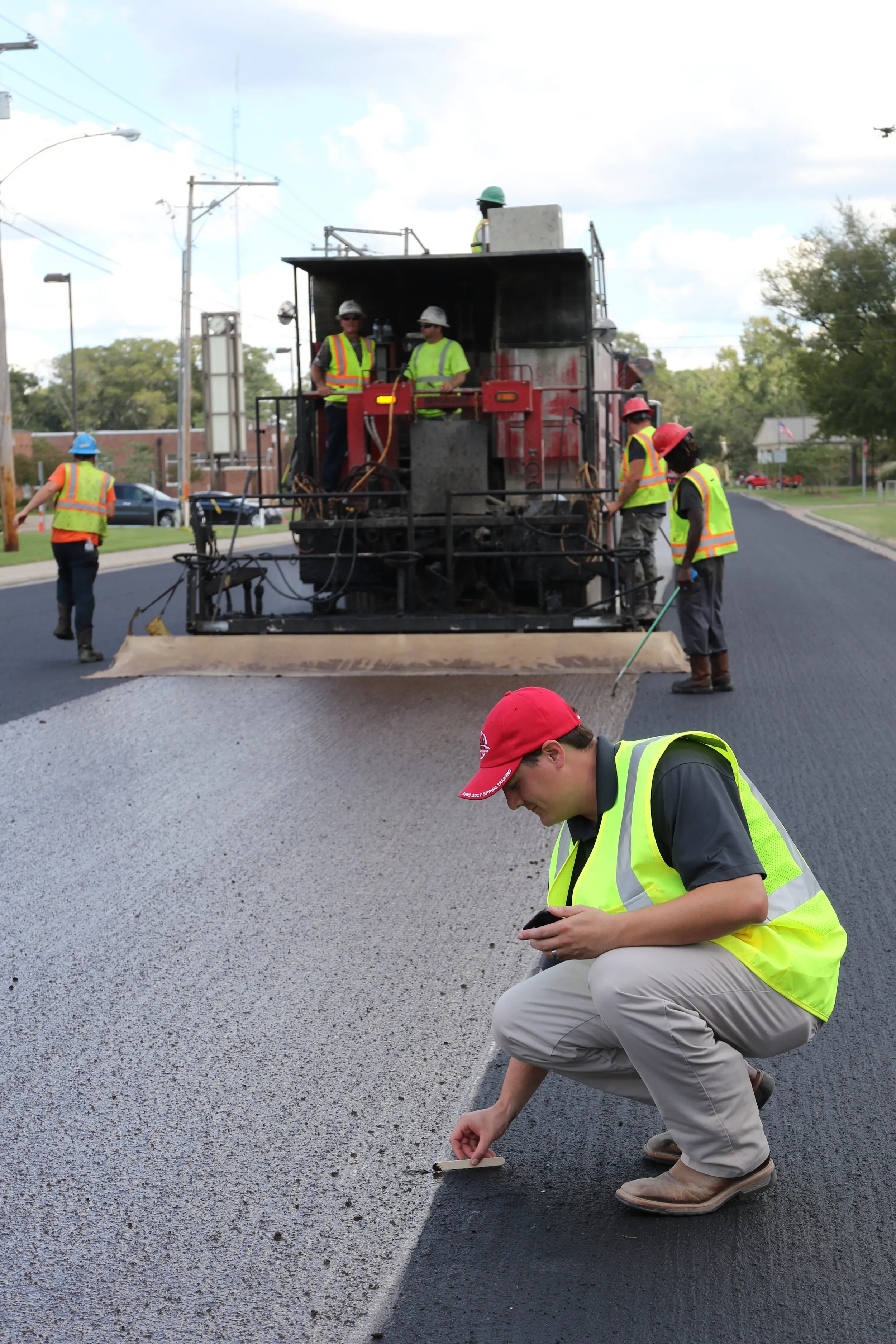
Image Credit: Ergon Asphalt
Purpose: Combine the waterproofing and macrotexture of chip seal with the improved chip retention and more uniform riding surface delivered by a slurry seal (or micro surfacing) cap.
Method: Place a chip seal first, then, after a short waiting period, place a slurry seal or micro surfacing layer over the top as the cap.
Best fit in Sydney: When you want chip seal sealing performance, but you also want fewer loose chips, a more refined wearing course, and more consistent friction and ride quality.
Common success checks:
Chip seal is stable and ready to receive the cap.
The cap layer is selected to match the road context (traffic, turning, surface condition).
Decision guide for Sydney asset managers
Choose chip seal if:
Your priority is sealing and wet-weather friction.
The pavement is sound enough that you are not trying to fix major deformation with a surface treatment.
Choose slurry seal if:
The road is structurally sound, but the surface is aged, slightly fretted, lightly cracked, or losing texture.
You want a smoother finish in urban environments.
Choose Cape Seal if:
You want the sealing performance of chip seal, plus a tighter, more uniform top surface.
You want better chip retention and a more refined riding surface than chip seal alone.
The most common reason these treatments disappoint
It is usually timing.
If the pavement has already lost support due to trapped moisture or base breakdown, a surface seal may appear sound for a while, but structural deterioration continues beneath the surface. The best outcomes come when the road is still fundamentally sound, and you treat early.
Sydney-specific considerations that affect treatment selection
Heavy turning movements at intersections and along bus routes can be more demanding on surface treatments. Choose your treatment and aggregate accordingly.
Shaded, tree-lined streets can remain damp longer, making moisture management and drainage even more important.
Coastal exposure and frequent wet weather increase the importance of sealing and friction, but they also underscore the need for proper workmanship and quality control.
Frequently asked questions
Is chip seal the same as sprayed seal?
In Australia, sprayed seal is the common term. It is the same basic concept: binder plus aggregate placed and embedded to form a sealed surface.
Can you put slurry seal over chip seal?
Yes, that combination is a cape seal. The chip seal provides sealing and texture; the slurry cap improves chip retention and surface uniformity.
Which is best for Sydney's local streets
If the pavement is structurally sound and you want a smoother urban finish, slurry seal is often the better fit. If sealing and friction are priorities, chip seal may be a better fit.
When should line marking be reapplied?
Line marking timing depends on the treatment type, cure, and agency practice. Plan line marking as a staged activity to protect safety and performance.